Showing posts with label Culture. Show all posts

2008-11-04

Reappreciating Okinawa's languages, while there's still time

A great article on Okinawan language can be found here: http://search.japantimes.co.jp/cgi-bin/ek20081104a1.html

And is also transcribed here:

By PATRICK HEINRICHSpecial to The Japan Times

The saying "a language is a dialect with an army" is a bit worn out in linguistic circles. A change in how it is uttered might save it, though. How about "gengo ndi yyu shē guntai muchuru hōgen yaibin" (言語んでぃっゆしぇー軍隊むちゅる方言やいびん)? This is how you would say it in uchināguchi, a language mainly spoken on Okinawa Island. To get this transliteration, I made a telephone call that went on for 45 minutes because words such as "language," "army" and "dialect" cannot be easily translated into uchināguchi and the uchināguchi speaker I was consulting, Byron Fija, did not want me to write something weird. He agreed only to this exact version.

Fija and many other speakers of uchināguchi insist that, despite big lexical gaps, it is a language in its own right. If a lack of mutual intelligibility was to serve as an indicator for determining languages, one would have to agree; speakers of Japanese do not understand uchināguchi.

Nor do they understand "mǖnudzu tiia guntai u muchǖdzu sumafutsu tidu adzu" (むぬぅずてぃーや軍隊うむちゅずすまふつてぃどぅあず), which is a translation of the same saying into myakǖfutsu, a language spoken on Miyako Island, also in Okinawa Prefecture. Staff at Miyako City Hall who gave me this translation, insisted that I should not treat it as the sole possible translation, or, worse, the sole legitimate version of myakǖfutsu. There exists no standard myakǖfutsu.

Not everyone in Japan knows that five different groups of languages exist in the Ryukyu Islands, the southern half of which fall under Okinawa Prefecture's administration. This multilingualism is not well known because the Ryukyu Islands are part of Japan and we tend to pair countries with just one language. But there are far more languages than nation states. By not being official or national languages, these tongues lack, to various extents, standardization and lexical development. Not being used for specific functions and rarely being written, many — although not all — are dying out.

This is the case with the Ryukyuan languages, whose proficient speakers are generally aged over 60. While the decline of a language is the result of a linguistic community's collective choice to stop teaching a language to the next generation, such choices are usually made in circumstances largely shaped by others — specifically the linguistic majority. But circumstances change. Many Ryukyuans born since 1950 now regret being monolingual. Together with their parents' generation, they rue language choices made in their families half a century ago. This change of mind stems from a re-evaluation of local languages that can be seen in various efforts to maintain them, either as a tool of communication or as a part of their cultural heritage.

The latest example of the renewed appreciation of local languages is an art exhibition entitled "Okinawan Language — An Art Exhibition for Our Future." The exhibition ran from Sept. 9 to Oct. 5 in the new Okinawan Prefectural Museum in Naha and was accompanied by lectures, music and theater performances on and in Ryukyu's local languages.

The main contribution to the exhibition came from the Society for Documenting the Ryukyu Archipelago, which has conducted hundreds of interviews with Ryukyuans speaking in their local languages about their wartime experiences. The exhibition featured video, text and photographs from these sessions, as well as kana cards in local languages and verbal-arts performances. On a more interactive side, visitors were asked whether they regarded themselves as Okinawan or not. They were asked to wear T-shirts that read either "I am Okinawan" or "I am not Okinawan" and then had their photographs taken. The results might surprise some people.

A photograph of a Western man in an "I am Okinawan" T-shirt sat nestled beside photographs of people who looked Okinawan but said they were not. This interaction, and the resulting photo exhibition, gave participants and visitors a chance to reflect on what it means to be Okinawan and what role language and ethnicity plays therein.

The end of the exhibition brought another opportunity for interaction; visitors could leave comments on what they had seen. "Shimakutuba rocks," reads one message, referring to a Ryukyuan name for their languages.

What remarks would visitors leave behind at exhibitions on the future of official national languages such as Japanese or English? Maybe it is exactly the lack of an army that makes uchināguchi rock. But for how much longer?

2008-07-25

Prefectural museum presents island history, art

The main exhibit of the Okinawa Prefectural Art Museum showcases the influence World War II had on many Okinawan artists. (Photo by Lance Cpl. Tyler J. Hlavac).


NAHA, Okinawa (July 25, 2008) -- For history or art buffs looking for a glimpse into Okinawa's history and culture, the Okinawa Prefectural Museum and Art Museum both offer a variety of experiences to enjoy.


The historical museum hosts an array of artifacts from ancient Okinawa dating back 18,000 years. The art museum showcases the pre and postwar era art by Okinawan artists.


The Okinawa Prefectural Art Museum is the first prefecture-run art museum on Okinawa, according to the museum's Web site, and it displays the influence World War II had on many Okinawan artists.


Some of the art displays show the chaos and destruction during the battles of World War II. In other displays, modern artists use their work to display their thoughts and feelings on modern day life, Okinawa's culture, and the trends in Okinawan art over the years.


There are also English- and Japanese-language newspapers from the World War II era as well as exhibits where visitors can learn about Okinawa's ecosystem or about the Okinawan culture from its beginning.

The Okinawa Prefectural Museum is dedicated to the study, collection and preservation of materials and resources related to Okinawa's nature, history and culture.

Visitors can view such things as an 18,000 year-old man from primitive Okinawa named Minatogawa Man.

Other exhibits include displays of ancient shrines, ancient tools and clothing worn by Japanese and Okinawan people throughout its historic periods.

History buffs may also take their time in the museum's media center, which contains archived documents and other audio and visual information detailing the history of Okinawa including the Battle of Okinawa.

The museum is a good way for visitors to learn about the island's culture and history, according to Lance Cpl. Daniel True, a combat videographer with the Camp Foster Combat Camera Center.
"The museum was the first one on Okinawa I had ever been to," he said, "and I didn't know Okinawa had so much rich, art history. The staff was very accommodating, and I recommend the museum to anyone who is new to Okinawa."

General admission to the historical museum is Y400 and the art museum is Y300. Hours of operation are 9 a.m.-6 p.m. Tuesday-Thursday and Sundays. Friday and Saturdays the hours are extended to 8 p.m. The museum is closed on Mondays.


To get to the museum from Gate 1 on Camp Kinser, take Route 58 south seven stoplights and turn left. Go to the second stoplight and the museum is on the left-hand side.


For more information, visit the Okinawa Prefectural Museum and Art Museum Web site at http://www.museums.pref.okinawa.jp/.

2008-07-11

hey, mike: Okinawan cockroach


I have recently arrived on Okina wa and am looking forward to participating in the many spring and summer activities. However, an island veteran told me to be careful of some of the bugs because they’re gigantic. I live in a very old apartment off base, and am beginning to get worried. Is he pulling my leg?

-New to the Island

As winter ends, and the weather warms on Okinawa people begin to jump when they hear the word habu. Others dread entering the seas surrounding the island because they think a 30-foot shark will immediately eat them when they step into a foot of water While snakes and sharks can be dangerous, encounters aren’t as common as many believe, and a healthy dose of caution can lessen your chances of being injured. However, the return of warm weather brings a terror that is all too real—the large, disgusting, and almost indestructible Okinawan cockroach.

Imagine, it’s four a.m. and you’re suddenly startled from sleep by the sound of your better half’s screams punctuated by sounds of mayhem. Fearing the worst, you grab the nearest heavy object and dash frantically to the clamor emanating from the kitchen with visions of burglars and Hannibal Lecter racing through your bead. As you reach the kitchen doorway, you see an object flying like a harrier jump jet make a hard 90-degree turn around the refrigerator, then accelerate towards your face like a radar-guided missile. Milliseconds before impact your brain registers the fact that the object is a flying cockroach—larger than any roach you have ever seen in your life. Immediately your own screams of terror drown out the pitiful noises coming from your spouse.

If you have lived through “the warm season” on Okinawa (usually from early March to late November), it’s possible that you have beard or even experienced a situation like this one, Hardened veterans of the tôbira (cockroach in the local dialect) wars often swap stories of their epic battles with roaches the size of Rodan (a flying monster from the Godzilla movies) and lament that defeating them is an impossible task, However, although it can seem like a hopeless undertaking, victory is attainable. Battles can be won one can of Raid at a time, but the key weapon in the war on bugs is persistence. Sprays, pellets, and roach traps (the ones roaches check into, but don’t check out of) are effective, but the methods often only succeed in giving you momentary peace of mind if used by themselves. The only true way to eliminate cockroaches from your home is diligence.

Keeping kitchen areas clear by immediately cleaning up spills and crumbs, keeping foodstuffs in sealed containers, and cleaning kitchen grease on a regular basis is a significant step (roaches also love the smell of stale coke and beer—rinse out containers before recycling them). Denying the roaches access into your home by caulking up cracks and checking door and window seals also helps. These methods, when used in combination with pest sprays that contain pyethrin and permethrin (or if pets and/or children are present, boric acid) will lead to victory in the war on bugs. However, always remember to exercise caution when using these or any other types of chemical.

If the combination of these methods doesn’t eliminate the problem, or you have a run-in with a giant wasp, the centipede that ate the Humvee, or the yellow- and-black-striped spider that ate them both, call a real professional... from a safe distance of course.
- Mike Daley

2008-07-04

mccs TV: Awamori

July 8, 11 am. & 6 p.m.

Drink it straight, on ice, or as the base of your favorite cocktail mix. Awamori is to Okinawa like vodka is to Russia and it is quickly growing in popularity around the world. Learn all about the distilled liquors history and the best ways to enoy it in your own home in this episode of Okinawa Guide.


MCCS Broadcast Team: Joe Andes, Victor Mercado, Samy Fineman, Don Purdy, Kathy Millette, Shelley Merrell, Chrissy Barnett Miller

culture corner: Spam Onigiri


Spam probably isn’t the first food that pops into most minds when craving a delicious snack. Many people do not find Spam very appetizing and often refer to it as “mystery meat” or simply dislike it because it is not exactly nutritious. However, one may be pleasantly surprised after tasting Spam onigiri which happens to be sold all over Okinawa in places such as local Family Mart or Lawson convenience stores.

Onigiri is boiled rice that is molded into a triangle, cylinder or circle that is wrapped in nori (dried seaweed) and usually has some type of filling inside. Although this may sound similar to sushi, it differs because the rice is not treated with vinegar beforehand. It is also about three times larger. All kinds of onigiri can be found, most of them triangular-shaped, with fillings such as salmon, miso (fermented soybeans), umeboshi (pickled ume fruits), tuna, and more.

Spam onigiri, also known as Spam musubi in Hawaii and poku-tamago locally, resembles a sandwich as it is rectangular-shaped and is a little larger than the triangular onigiri. It consists of rice wrapped in nori and contains a slice of fried Spam and scrambled egg placed in the middle. Okinawan Spam onigiri often has tuna or miso inside as well.

Spam is made of ham, pork, sugar, salt, water, potato starch, and sodium nitrate, which helps it retain its pretty pink color. It is produced by Hormel Foods and has sold over six billion cans since 1937. Spam has become a part of Okinawan culture and cuisine and can even be purchased in gift sets as souvenirs at local gift shops.

Spam was introduced to Okinawa during World War II and has been popular ever since. The U.S. military brought it to the island when food was being rationed. Fresh meat was scarce so Spam was served as a convenient alternative because of its high calorie count and long shelf life. It didn’t take long for the Okinawans to take a liking to it, and they soon began incorporating the “mystery meat” into many local dishes, such as champuru and of course, Spam onigiri.

Spam onigiri is a surprisingly tasty snack that- can be identified by an Okinawan-themed plastic wrapper with pictures of shisa, a red hibiscus flower, and Shuri Castle on the front. It tastes great at any time of day, and can even puts a twist on a typical breakfast. It can be consumed cold, straight out of the refrigerator, or can be heated up in the microwave for about thirty seconds. The cashier at Family Mart or Lawson will even heat it up for you when you purchase it. A cold Spam onigiri tastes great on a hot summer day. It costs about 200 yen and will offer you a taste of Okinawan cuisine that you may have never experienced or dared to try.

—Rebekah Davenport

2008-07-03

The Wish List


Here’s a list of the top ten things you must do while you’re on Okinawa.

1) Learn to Dive
Get scuba certified at a Tsunami Gear SCUBA Center and then dive every chance you get. Pick up a copy of Okinawa Outdoors magazine.

2) Participate in or support The Single Marine Program
If you’re an unaccompanied Marine or Sailor between the ages of 18 and 25, take part in the Single Marine Program. You can get your quality- of-life issues addressed and recommend new or improved programs, services, or events offered by MCCS, AAFES, and the USO. Call 645-3681 for details.

3) Participate in a Sports Tournament
Compete in MCCS athletic tournaments, which are offered in almost every sport. Schedules appear in the Source.

4) Get Educated
MCCS Lifelong Learning centers offer classes that count toward a bachelor’s or master’s degree from one of five universities, as well as various certification programs. You can also take classes via distance learning.

5) Get in Shape
Get fit using the MCCS fitness centers and athletic programs. Fitness centers are located on each base, and various athletic programs are also available. Free group fitness classes are held at each of the camps, and personal trainers can assist you in achieving your fitness goals.

6) Learn the Local Language and Culture
MCCS Personal Services Centers offer a variety of Japanese language and culture classes, including Japanese calligraphy, washi (Japanese paper art(, and cooking. Classes are free to all SOFA personnel.

7) Tour Asia
Take a tour of Okinawa and nearby destinations. MCCS Tours+ not only shows you the island, but also offers travel to exotic destinations such as Hong Kong, China, Australia, and Thailand. Call 645-3502 for details.

8) Learn Karate
Okinawa is the birthplace of karate, so where better to learn martial arts? Contact your local fitness center for details.

9) Sample Local Foods
Sample Asian foods at your MCCS clubs and restaurants. Menus include a variety of local favorites. Also, check out the monthly restaurant review in Okinawa Living magazine, which features off-base dining and the restaurant coupons in the Source.

10) Have Fun!
MCCS takes pride in helping to Make Okinawa Home” for those stationed here. However, to truly make the best of your stay here on Okinawa, go outside the gates and experience the island’s fascinating culture and meet the friendly local population.

fenutin okinawa restaurant & Kalahai okinawan music


fenutin okinawa restaurant
Open daily from 5:00 pm - 12:00am
(Last order 11:30pm)

A traditional Okinawan themed restaurant serving an array of freshly prepared sushi, sashimi, tempura, traditional Okinawan foods, and much more.

Pair your foods with the local beer Orion. Or, enjoy some of Okinawa’s finest awamori

For reservations, call 098-926-3008
fenutin@rinken.gr.jp

start your evening dining at Fenutin.
continue your evening at Kalahai, our original Okinawa live house.
Kalahai okinawan music
For reservations, call 098-982-7077
kalahaai@rinken.gr.jp
Open daily from 6:00 p.m.-10:00 p.m.
1st performance 7:00 p.m.-7:45 p.m.
2nd performance 9:00 p.m.-9:45 p.m.

Daily program:
music charges- adult\Yen 1,500 - child\Yen 700
Rinken Band special live:
from 8 p.m. (last order 7:30 p.m.)
music charges- adult\Yen 3,500 - child\ Yen 1,500

Kalahai featuring the energetic performances by Okinawa’s own Rinken Band. Rinken Band has entertained millions of fans since 1987. Rinken Band has also recorded several CD’s.

Don’t miss this unique and energetic show.

Remember, if you drink, don’t drive.
We want you to return for more fun and excitement!
We accept US$ and Visa/Mastercard

2008-06-27

hey, mike: Star sand

While I was emptying my boots of sand after filling sandbags at work I noticed that some of the sand seemed different—shaped like tiny stars. Is this sand native to Okinawa? Are there beaches filled with this kind of sand?

— Reggie Valdez

Grains of sand, like many other aspects of the environment, are often taken for granted until you’re given an opportunity to take a closer look. While sand collecting in the bottom of your boots can be irritating (not to mention the particles that get into cars, beds, sandwiches, and Speedo LZR Racers), some sand can actually be quite beautiful when studied closely. Sand can be made of many different materials: from the Hawaiian black sand of volcanic origin, to brilliant quartz sand, to sand made up of particles of coral, sea urchin spines, and other sea organisms. Incidentally, the sand in your boots was probably star sand, or hoshi-zuna.

On the Southern Ryukyu Island of Taketomi, located between the Ishigaki and Iriomote Islands, a folk story told by Toru Uesedo insists that star sand are all that remains of the children of the North Star and Southern Cross—infant stars that were born in the warm, gentle currents of the seas surrounding the island. In their parental bliss, the Southern Cross and the North Star had regrettably forgotten to garner the sea god’s permission to use the area. In a fit of petty anger, the temperamental deity had the celestial offspring dispatched. After the conflagration, the tiny skeletons of the stars washing up on the shores of Taketomi island were all that remained. Fortunately for the infant stars, a kind goddess lived on the beaches of the beautiful island. She took pity on the star children and gently gathered their remains. She instructed all of her followers to place the star sand in their incense burners so that the sand could follow the smoke back to their parents in the heavens. Many islanders still follow this custom today.

All legends aside, scientists state that star sand is actually made up of the exoskeletons (shells), of millions of aquatic creatures called foraminifera. These infinitesimal organisms are among the smallest of the marine protozoa—a kind of minuscule amoeba with a tiny shell. Foraminifera are found in most marine environments, from the relatively shallow inter-tidal regions to the deepest ocean trenches, from the tropics to the poles. Foraminifera are a vital link in the world’s marine food chain. On any given continental shelf there can be tens of thousands of living creatures per square meter of ocean bottom. And, many larger animals such as snails, sand dollars, fish and others depend on foraminifera for sustenance.

Although plentiful in the oceans, star sand is rare, especially on mainland Okinawa. It is sometimes sold in tiny jars to tourists because the sand almost universally brings fond feelings for the islands’ beautiful beaches. In other words, don’t throw away the contents of your boots; while they may not be baby stars with celestial parents, you never know...
—Mike Daley
Got questions for Mike? E-mail editor@okinawa.usmc-mccs.org.

Ryukyuan Island Style

If rising humidity, suffocating heat, and rapidly increasing bug count mean anything, summer has officially arrived on Okinawa. While most would rather beat the heat the heat by worshipping central air, going outside is unavoidable. Enter Okinawa’s answer to staying cool and style-savvy— kariyushi wear.

Translating roughly to “happy abundance,” kariyushi is Okinawa’s version of the Hawaiian shirt. Created to entice tourists to purchase local goods during vacation, kariyushi began picking up steam as a local product that combines both fashion and functionality. Anyone who has spent a
summer in Okinawa knows it is impossible to survive outside in thick attire, much less draped in heavy work garments.

Kariyushi employs the same basic look as Hawaiian shirts, but the design, fabric, and colors make this style unique to Okinawa. With details ranging from clown fish to ripened goya to jumping shisa, these gorgeous garments combine vibrant colors and bold patterns to achieve a look that exudes Okinawan chic.

So when you must venture from your climate-controlled oasis, why not sport your own bit of Okinawan style? Local shops have shelves stocked with such garments including those made by the popula brand Mango House. But be forwarned - just because you purchased a tropical shirt on Okinawa, you’re not guaranteed true kariyushi wear. To fall within that exclusive category, the shirt must be created entirely on Okinawa, show local imagery, and have a certified seal. Only then are you clad in true Ryukyuan island style.

—Lauren Bradfield
QUESTIONS? COMMENTS? E-mail thesource@okinawa.usmc.org

2008-06-06

Traveling etiquette


Story and photo by Keith T. Graff

If the weather allows you to get out of the house and see a little more of Okinawa, pack the tribe into the car. Wherever you go, there are a few things you should know from the start. Knowing where to stop can also make a journey memorable.

Driving can be a pleasure or a pain. Sooner or later, one of your passengers will either get hungry or have to use the rest facilities.

Convenience stores are easily found everywhere you go. It’s not uncommon to see more than one on opposite sides of the same intersection. But unlike in America, you shouldn’t just pop in to make a pit stop and go. In Japan, when you need to use the facilities, it is much appreciated if you make a purchase.

Another option for folks is to stop at a “Michi-no-eki” or road station. Virtually every town and village across the island has one. If you plan on traveling in Okinawa for any length of time, it’s a good idea to familiarize yourself with their locations.

Most Michi-no-eki’s are known for their cleanliness and spacious parking areas. You can also get a great deal on some cheap eats. Not only are the prices reasonable, often times the local cuisine is quite tasty.

Two stops to keep in mind along the Okinawa expressway is Nakagusuku village and Igei in Kin town. Look for the rest stops at Nakadomari in southern Onna village, Kyoda in southern Nago City, the Yui-Yui Kunigami located near the Okuma resort and Hiji Falls among others. The next time you go for a drive, look for the eki, but don’t get in a wreck!

culture corner: Ramune


After a long day of playing under the searing summer sun, it’s an American childhood tradition to sit on the porch gulping down icy glass after glass of sweet lemonade and munch on homemade cookies. For Japanese children the way to cool off with friends is to go to the nearest okashi-ya (candy shop) and sit under any available shade sipping a cold bottle of ramune.

Ramune, a name supposedly derived from the English word “lemonade" is a popular summer beverage recognized by its simple yet unusual blue glass bottle and its popularity as a candy flavor. Surprisingly, the inventor of the popular soda was a Scottish pharmacist named Alexander Cameron Sim who lived much of his life in Japan. Ramune’s claim to fame was not in an extraordinary flavor but rather the bottle in which it came. While some are made of plastic, many of the unusual Codd-neck bottles are traditionally made of heavy blue glass. The bottle is shaped like a snowman; the “head” of the bottle is a small hollow separated from the body by two dimples in the bottle’s neck. At the mouth of the bottle blocking the flow of the bubbly liquid is a glass marble held in place by the carbon dioxide pressure inside. The first Ramune bottles used cork, but no one knows the real reason or origin of the marble. In order to get the first refreshing sip, the marble has to be pushed down into the hollow of the bottle using a small device that comes with the drink. The small pop-kachink of the falling marble is instantly followed by an eruption of sticky white foam. The marble then stays in its little chamber where it rattles and clinks around as the drinker quenches his or her thirst.

The soda inside is usually clear and akin to club soda, but with a subtle citrus taste, similar to Sprite. Though the original “lemon-lime” flavor of Ramune is the most popular, pineapple, melon, orange, Blue Hawaii, lychee, kiwi, strawberry, and even wasabi and curry flavors are also available.

Removing the marble from the bottle made Ramune both a popular children’s puzzle and drink. Breaking the glass served as a simple solution, and so did melting down the plastic ones. It took a real master to retrieve the marble without breaking the bottle. Today, however, many of the plastic bottles come with detachable mouths so that the marble can easily be removed.

The Ramune version of a cereal box toy, the marble can be played with once it is removed. Marble playing in Japan supposedly began in the 1800s when children began removing the marbles from Ramune bottles to use as toys. The glass bottles are often saved by tourists and foreigners as souvenirs and even kept by recyclers as pretty makeshift vases. Children typically collect the marbles, though some keep the bottles as summer mementos. So on a steamy summer afternoon in Japan, instead of settling for that cup of lemonade, remember that cloudless sky-blue bottle of Ramune.

—Mine Furusho

2008-05-10

COURTNEY ARTS & CRAFTS - Mother's Day Ikebana Class


May 10 • 3p.m. FEE: $20*

THIS YEAR, MAKE YOUR OWN FLOWER ARRANGEMENT FOR MOM. KIDS 12 YEARS AND OLDER CAN SIGN UP. YOUNGER CHILDREN MUST BE ACCOMPANIED BY AN ADULT TO PARTICIPATE. SEATING IS LIMITED. SO SIGN UP BY SUNDAY, MAY 4.

*PRICE INCLUDES FLOWERS, EQUIPMENT, AND INSTRUCTION.

To sign up of for more information, call 622-7492

2008-05-09

Scaly beasts cut wakes

Marines, sailors propel dragons in 8th year of boat-race tradition

Lance Cpl. Andrew S. Avitt
OKINAWA MARINE STAFF

Two roughly 30-member crews of Marines and sailors competed in Naha’s 34th Annual Dragon Boat Festival at Tomari Port May 5.

The two all-Marine-and-sailor teams represented the Marine Corps Community Services Single Marine Program for the eighth year in a row at the races.

SMP had one all-female team and one all-male team, which never raced against each other in the field of 52 teams, which included all-Japanese crews, crews comprised exclusively of U.S. soldiers and also Japan Ground Self Defense Force crews.

Each heat matched up three boat crews, which propelled their colorful dragon boats forward, paddles digging in unison into the water with each beat of the caller’s drum.

Hundreds watched as SMP’s all-male team bested the U.S. Army crew in their first heat, finishing first with a time of 5 minutes and 25 seconds for the 600-meter course. They received a trophy and advanced.

“It’s all about the rhythm,” said Petty Officer 1st Class Tudo Ricardo. an SMP team member. “Once we got the momentum going with that rhythm, it wasn't hard.”

But rhythm only carried the SMP males so far against the two Japanese crews they met in the second race. The Japanese showed prowess in the 500-year-old Chinese tradition, eliminating the Americans after handing them a 3rd place finish in the heat.

The SMP males said beating the Army in a healthy rivalry was enough to call it a successful day.

The SMP females raced against two locally renowned teams, rowing the 600 meters in 6:47, but the team’s finishing time was short of what was needed to advance. Despite not advancing. the SMP ladies walked away smiling.

“Dragon boat racing was a great opportunity to build camaraderie with our neighbors,” said Cpl. Jeannene Burns, a member of the SMP female team. “What really made this great was coming out here, meeting new people and experiencing the culture.”

MCCS representative and team coach Sergio Morales said SMP will continue the tradition for years to come.

2008-05-05

hey, mike: Dragon boat races


I’ve been hearing about how they have dragon boat races here on Okinawa. Can you tell me a little bit about them? Are they the same as the ones in Hong Kong?

— Noah J. Smith

There are several popular Chinese legends that depict water dragons as quasi-demigods that govern the rivers, seas, and oceans. And every year, during the spring and summer months, these legends come to life in the waters surrounding the island of Okinawa.

Most agree that dragon boat races originated in China, and were either brought to the island as a form of entertainment for visiting Chinese envoys, or were transferred to the Ryukyu Kingdom by islanders who saw the spectacle while visiting or studying in China. One of the most popular legends about the beginning of dragon boat racing is the story of Chu Yuan—a faithful member of a 278 B.C. Chinese emperor’s court.

ChuYuan was a poet and philosopher, and while many in the government respected Yuan (and usually heeded his sage counsel), they adored playing their political court games too much. Yuan worked long and hard for reforms to save the ailing empire. However, it wasn’t long before the emperor was beguiled by silver-tongued sycophants and ChuYuan was banished from the court.

While in exile, Chu Yuan composed poetry about his fervent love for his country, and his deep concern for his homeland’s future. He made friends among the rural populace, especially with the fishermen.

However, upon learning of the devastation of the court at the hands of a rival kingdom, Chu Yuan fell into a bleak depression. And, because he felt somehow responsible, he leaped into the Mi Lo River holding a great rock.

Many fishermen raced out in their boats in an attempt to save Chu Yuan while beating on drums and splashing their oars in the water to keep the water dragons away from his body. Although many boats were dispatched to save him, none were fast enough, It is said that the dragon boat races throughout Asia were originally held in honor of this statesman.

Today, dragon boat races are held in fishing communities throughout Okinawa beginning in the late spring and lasting through late summer. The largest of these festivals is the Naha HárI (also known as Harii) which is held during Golden Week, five days of holiday between April 29 and May 5. Naha’s dragon boat races, which will take place May 3 to 5, pit large multi-colored boats against each other in breathless sprints. Each vessel is powered by a 32-rower team and decorated with ferocious- looking dragon heads, scaled arms with sharp talons, and elaborate tails.

Teams range from those made up of district residents, groups comprised of company employees, and rowers from different countries (including teams from U.S. military installations). The three-day Naha Hâri Festival often draws hundreds of thousands of spectators and incorporates food booths, live band performances, and nightly firework displays.

Regardless of origin, dragon boat races remain immensely popular on Okinawa. The races have changed considerably over the centuries: today many of the ancient symbolic rituals of veneration are overshadowed by the entertaining spectacle. However, almost everyone who has witnessed or participated in a race will probably attest to this—during hâri season, water dragons do indeed rule the seas of Okinawa.
—Mike Daley

Got questions for Mike? E-mail editor@okinawa.usmc-mccs.org.

Dragon Boat Races TOUR


ADULTS
$18 per adult

CHILDREN (3—11)
$11 per child
(0—2)
$5 per child

Cancellation Policy

Refunds for tours will only be granted to customers who cancel their reservation no later than two days before the tour date. Exceptions will be granted only for medical emergencies and duty obligation with written verification. MCCS Tours+ reserves the right to cancel tours if minimum reservation requirements are not met.


Monday, May 5
10 a.m.—6 p.m.

Experience Okinawan culture at one of the most well-known, well-attended events on island. Watch as teams (including those representing the U.S. military branches) entertain spectators with numerous races. Between races, enjoy live music, shows, street vendors, food booths, and games. Sign up at your local MCCS Tours+ office.

Camp Foster 646.3502, Mon-Sat, 9 a.m.—5 p.m.
Camp Hansen 623-6344, Mon—Wed, Fri, 9 a.m.-5 p.m.
Camp Kinser 637-2744, Fri, 9 a.m.—5 p.m.

2008-05-03

mccs TV: GUSUKU


GUSUKU
Tuesday. 11 a.m. & 6 p.m.

Gususku means "castle” or “fortress” in the Okinawan language and on this small island there are two standing gusukus and almost one dozen gusuku ruins to visit. Some of them are so important to the culture and history of the Ryukyu Islands that UNESCO has listed them as World Heritage Sites. In this episode of Okinawa Guide find out why these cultural treasures are being preserved.

MCCS Broadcast Team: Joe Andes, Victor Mercado, Samy Fineman,
Don Purdy, Kathy Millette, Shelley Merrell

2008-05-02

Ocean Expo Park offers rare peek at aquatic life

** NOTE: The captions for the photos in this article incorrectly identify the false killer whale (pseudorca crassidens) in the Okichan Theatre performance (NOT a pilot whale) & the fossil jaws of the megalodon shark (NOT of a great white).

Lance Cpl. Richard Blumenstein
okinawa marine staff

Averaging 25 feet in length, weighing up to 15 tons, with huge mouths that can open up to 4-feet wide, whale sharks are the largest fish on earth.

They are also a key attraction at Okinawa’s Ocean Expo Park, and the giant fish made a lasting impression on a group of people who visited the park during a trip to the park hosted by Marine Corps Community Services April 11.

Cpl. Matthew J. Vasquez and his wife Wilikinia both said the giant fish were the park’s most awe-inspiring attractions, and most in the group echoed their sentiment.

Ocean Expo Park, located on the western edge of Okinawa’s Motobu peninsula, is a major tourist attraction on Okinawa and is home to several subsections, including the Okinawa Churaumi Aquarium.

One of the aquarium’s main displays, the Kuroshio (Black Current) Sea tank, is massive. It is 10 meters deep (about 33 feet), 35 meters wide (about 115 feet) and 27 meters long (about 89 feet). Aside from the whale sharks, the tank contains a number of aquatic animals native to the Kuroshio (the warm undersea ocean current that supports the Okinawa underwater ecosystem) depth region including manta rays, sea turtles and countless schools of tropical fish.

The tank is constructed with a transparent wall, 35 meters wide (about 115 feet) and 60 centimeters thick (about two feet), that allows visitors see an amazing view of the ocean life.

“The whale sharks made me seem like an ant,” said 12-year old Jariah Tolbert. “They were amazing.”

Ocean Expo Park was the site of the Okinawa International Ocean Exposition, a 1975 event concerning oceanographic cultures, technology, and marine life. The park features several areas of interest, each containing distinctive themes focused on aquatic life, history and nature. The vast park has many exhibits and shows that can keep patrons busy all day.

On the MCCS tour, visitors all started with a trip through the aquarium but then went their separate ways. Some continued to explore the aquarium in depth while others ventured off into other areas including the Oceanic Culture Museum, the Native Okinawan Village, Emerald Beach, the Tropical Dream Center and the Tropical & Subtropical Arboretum.

For most of the children, and a few others on the tour, the comical antics of dolphin species, such as the pilot whale, at the aquarium’s Okichan Theater proved to be another favorite.

“It was pretty cool when the dolphin actually came on stage and stuck his tongue out,” Army Capt. Jeremy B. Robert said. “I’d never seen anything like that before.”

Elsewhere in the park, close encounters with in the Shark Research Lab was the highlight for 6-year old Daniel Locke III.

The lab houses an aquatic tank full of various kinds of sharks and is full of shark skeletons, including the jaw of a great white shark.

“I’d never been that close to a shark before,” Daniel said. “It was cool.”

In the Okinawan Village, the Vasquezes got hands-on experience in mastering one of their favorite lullabies on a Sanshin, a traditional Okinawan instrument similar to a banjo.

“We spent most of our time in the Okinawan Village,” Wilikinia said. “They taught us how to play ‘Twinkle, Twinkle Little Star’.”

The village replicates Ryukyuan dwellings found on Okinawa during the 17th and 18th centuries and presents visitors with a chance to experience ancient Okinawan culture and explore the ancient homes.

There is no fee to enter Ocean Expo Park, but aquarium tickets are ¥1,800 for adults and ¥1,200 for high-school students. A few other attractions in the park also have admission
fees. A complete list of attractions, show times and admission fees are available on the park’s
Web site at http://www.kaiyouhaku.com/en/index.html.

To get to the park, take the Okinawa Expressway north to its final exit near Nago City. Exit on Highway 58 and follow the signs to the park.

culture corner: Fugu for the Daring

Among the epicurean pleasures of the world, eating fugu is something unique. Fugu, the blowfish or globefish, offers taste, health, and adventure in every bite. To enthusiasts, the paper-thin slices of fugu flesh, eaten raw, have a matchless delicate flavor. They are high in protein and low in calories—a weight-watchers dream. But it is the third aspect, the thrill-seeker’s adventure, that makes fugu truly distinctive, for fugu is among the most toxic of marine creatures.

A single fugu contains enough poison to kill 30 adults and there is no known antidote, although people often survive the milder cases of fugu poisoning. The deadly toxin in fugu is tetradotoxin, a neurotoxin. In Japan, the long and impressive list of fugu martyrs includes several hulking Sumo wrestlers and other notables. Each year, a few dozen fugu eaters in Japan are poisoned, some fatally. However, the death toll has shrunk in recent years. Most deaths involve fishermen who catch fugu, prepare the fish themselves, and never live long enough to regret it.

There is an old Japanese folk song that goes, “I want to eat fugu, but I don’t want to die.” These days, there’s less of a reason to worry. Indeed, eating fugu prepared by a licensed fugu chef is completely safe; the testing and licensing of fugu chefs is handled at local government level.

To qualify, applicants must first serve an apprenticeship of at least two years under a licensed fugu chef. Next, they take a two-hour written examination. Then, within three minutes, they must identify five species of the dozen or so fugu that are marketed. Finally, in 20 minutes, they must prepare the fugu, separating the poisonous organs from those that are edible. About 35 percent of applicants pass.

In the tora fugu, or tiger blowfish, which is the most popular and most expensive type, the meat and skin are safe to eat. All other organs of that species are dangerous, particularly the liver and ovaries.

Even so, if the chef in a restaurant knows a particular customer well, he may ask him quietly if he would like a tiny piece of the toxic organs. Some people like the faint numbing sensation that eating a small quantity of the fugu toxin produces.

Fugu is not unique to Japan; nearly 100 species inhabit the warm waters of the world. Yet it is in Japan that preparing and eating fugu is a common ritual. Why fugu? Anthony Bourdain, the gastronomic Indiana Jones from Discovery Channel, sums it up: “The lure of fugu is the sensation that though you know it won’t happen, it just might be you this time."

—Amar Bhuyan

off-base events (May 2)


May 2, 7 p.m.
Okinawan Classical Dance Performance
Okinawa Folk Theater, Naha City
Tickets: 2,500 yen

May 3—5
Naha Hari (Dragon Boat Race)
Naha Shinko Port, Naha City

May 3—6, 9:30 a.m.—6 p.m
Okinawa Kodomo-no-Kuni Festival
Okinawa Zoo, Okinawa City

May 3—11, 9 a.m.—5 p.m.
Nago Orchid Festival
Neo Park Okinawa, Nago City

Beach strip serves up tasty culinary diversity


Story and photos by Reggie Cantú

There is much this beautiful island has to offer in the way of historical, cultural and the natural treasures. Then there are its not—so—obvious treasures: A stretch right off of Araha Beach where a rugged row of individualists have established eateries offering a cornucopia of tastes and atmospheres.

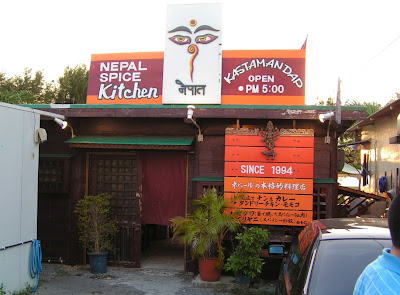
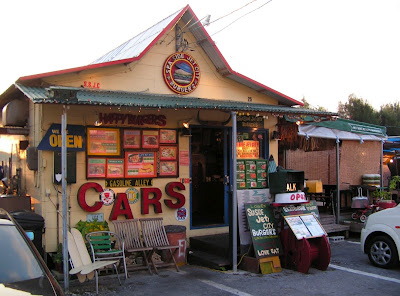
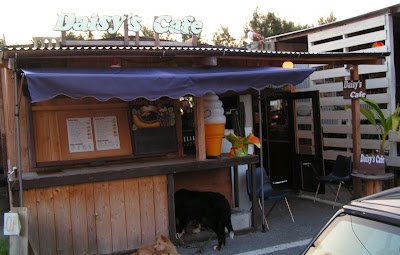
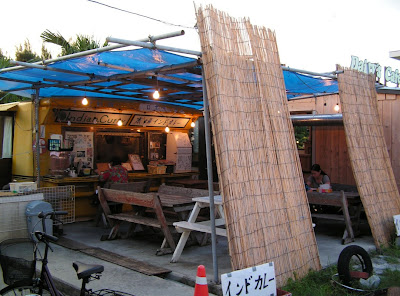
On this small piece of beach- front you can savor the rare flavors of Nepal at one end and get an exciting exuberance of reggae inspired Jamaican ambiance at the other. Tones of Santa Monica, Greenwich Village and India settle in between.

Each little bistro offers its own unique menu. At the south end. Narayan Prasad Joshi of Katmandu serves up the dishes of his native Nepal. “The difference in East Indian and Nepalese cooking is in the spicing and the use of oil,” he explained. Nepalese recipes are more subtle in the adding of spices. The curry dishes are easily appreciated even by those not normally fond of the tangy East Indian variety.

Entering Kastamandap, the only Nepalese restaurant on Okinawa, is to step into the exotic realm of the Himalayan kingdom. Hypnotic sounds of the sitar and the colorful decor create a believable illusion of having been whisked away to another land.

Next door is Seaside Jet City Burgers. The mood changes abruptly and a Californian surfer boy or girl would feel right at home. As the name implies, the house specializes in burgers, with the stacked-to-the-sky avocado burger being a local favorite. They have a full bar menu and the outside seating is perfect for the warm season.

Mr. lihoshi the owner and Mr. Higa the manager have put together a beach motif to make customers comfortable, taking full advantage of the informal island lifestyle. The staff provides service cheerily, making the Jet City experience fun as well as tasty.

Continuing north you will reach Daisy’s. The attitude is more like a Greenwich Village coffee house, mellower in tone. I am not saying Daisy’s is dull or boring. In fact, because of the wonderful menu, the place can get quite busy. The young entrepreneurs who run the place, Shuichi Kosaka and Akiko Imai, have come up with a creative bill of fare based mainly on a variety of fried rice.

A house specialty is the Energy Rice, which features sirloin cutlets, vegetables and a fried egg on a bed of garlic butter rice. Try the Kamakura Taco Rice with sautéed ground pork, green beans, peppers, pine nuts and Thai herbs on a bed of white rice and lettuce, topped off with onions and dried shrimp. Daisy’s outside tables make it a delightful place to watch a sunset.

Step next door over to Flex and suddenly you are in a Jamaican beach shack, jerk chicken. slow cooked for hours in a barrel grill, competes with the music and a full bar for your attention.

This is a party place, with reggae aficionado Chikashi “Tika” Egami presiding. Egami was enchanted by the Jamaican scene on a trip to the island and determined to re-create its atmosphere on this Okinawan beach. He has been very successful in bringing the flavor and boisterous joy of the Caribbean to this island. Flex is packed on the weekends with those who want to partake of that flavor and joy.

To find this dynamic little string of dining spots, go through the Highway 78 intersection on Highway 130 from Foster Gate 3, turn left at the light for a couple of blocks and look for the signs to Araha Beach and Chatan Park. Take the road just across the canal and turn left down the alley. Jet City’s pink flamingo signs are easy to spot at the turn.

You can also park your vehicle at the Araha Beach parking lot and walk a little to the north. Don’t be dismayed by the funky exteriors — you will do some good eating inside any one of them.